
The Public Work of the Humanities: Why Civic Life Requires More than Institutions
by Joseph Murphy, Director of Strategic Partnerships, and Rachel Pitkin, Programs Specialist
We usually think of infrastructure as something physical: roads, bridges, transit systems, electrical grids. Systems designed to make collective life possible without requiring much thought from the people who depend on them every day. But democratic societies rely on another kind of infrastructure too, one that is less visible and much harder to maintain. They require places where people can gather to reflect, argue carefully, remember, and think together in public.
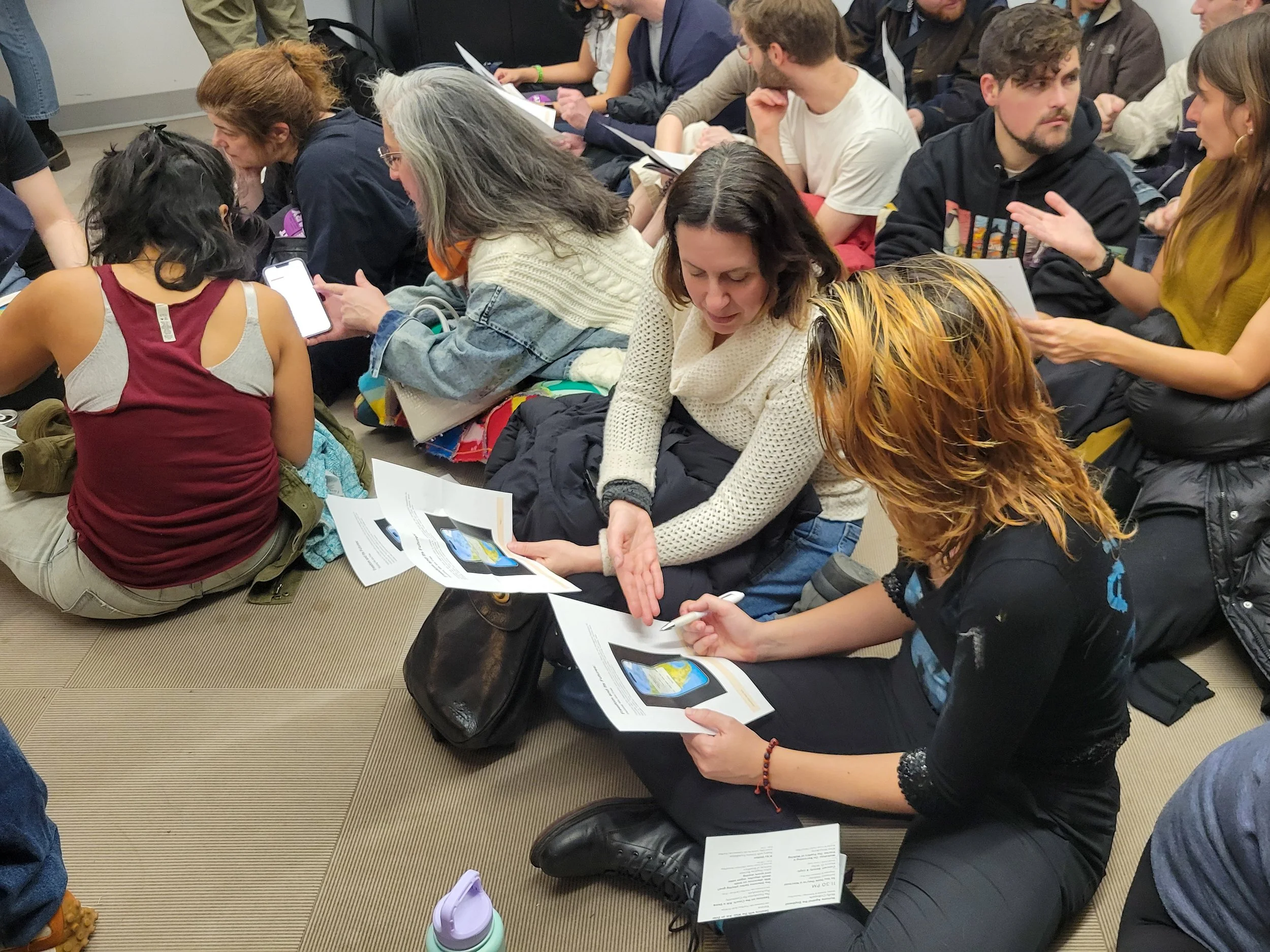
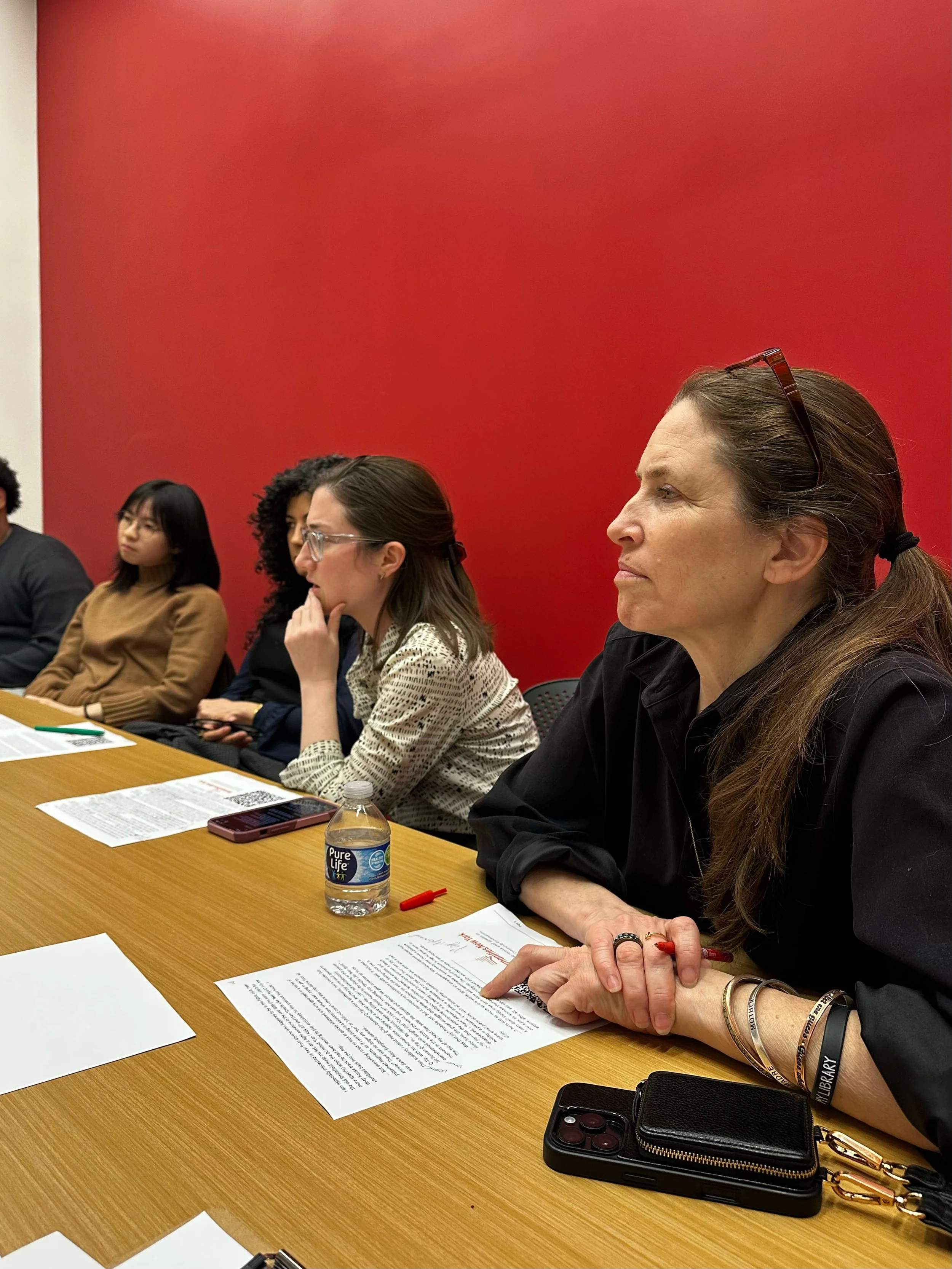
Sometimes that begins with very little: a library meeting room, a circle of folding chairs, a short passage read aloud to a room of strangers.
The change that follows is rarely dramatic. Nobody wins the conversation. Disagreement often remains. But over the course of an hour or two, people begin practicing habits that contemporary public life does not consistently encourage. They slow down long enough to consider someone else’s interpretation. They stay with a difficult question instead of rushing toward resolution. They discover that a text, a historical event, or even a single sentence can hold more than one meaning at the same time.
At Humanities New York, this is part of what we mean when we talk about civic life.
“Democratic societies require roads, bridges, transit systems, and electrical grids. But they also require places where people can gather to reflect on the kind of society they are becoming together.”
That phrase has become oddly narrow in recent years, often reduced to institutions, elections, policy debates, or civic literacy alone. Those things matter deeply. But democratic culture also depends on whether people retain the ability to inhabit a shared world with one another at all. It depends on whether there are still places where disagreement can unfold productively. That capacity is neither automatic nor permanent. It has to be practiced in actual rooms, through repeated encounters, and within institutions willing to make that work possible over time.
This is where the humanities matter, though perhaps differently than they are often described.
Outside universities, the humanities are not simply academic disciplines. They are practices of attention. They teach people to read carefully, to notice how language shapes meaning, and to recognize how history and memory continue to influence the present. They encourage patience with complexity. They ask participants to remain open long enough for interpretation, reflection, and conversation to deepen rather than collapse into certainty.
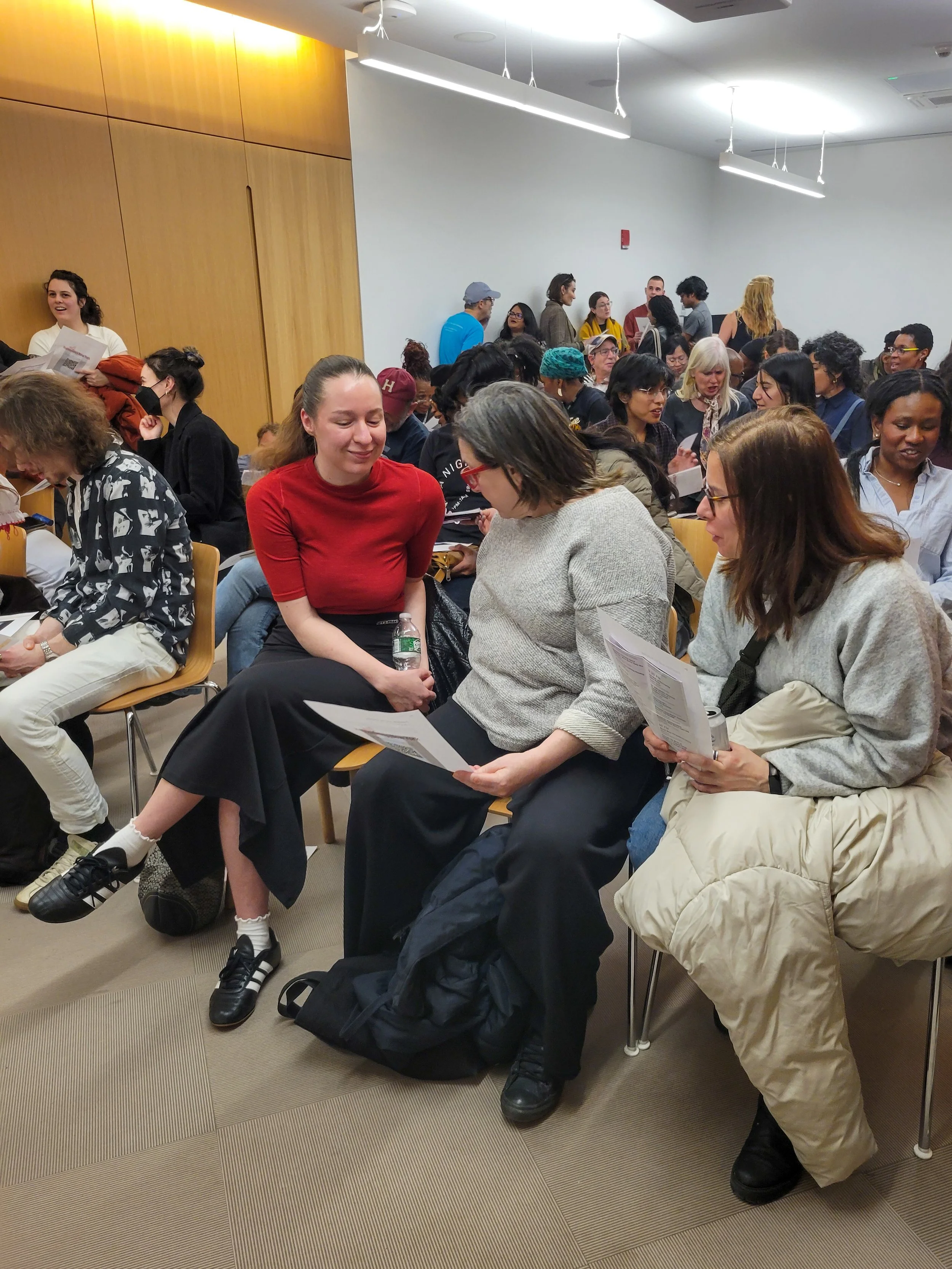
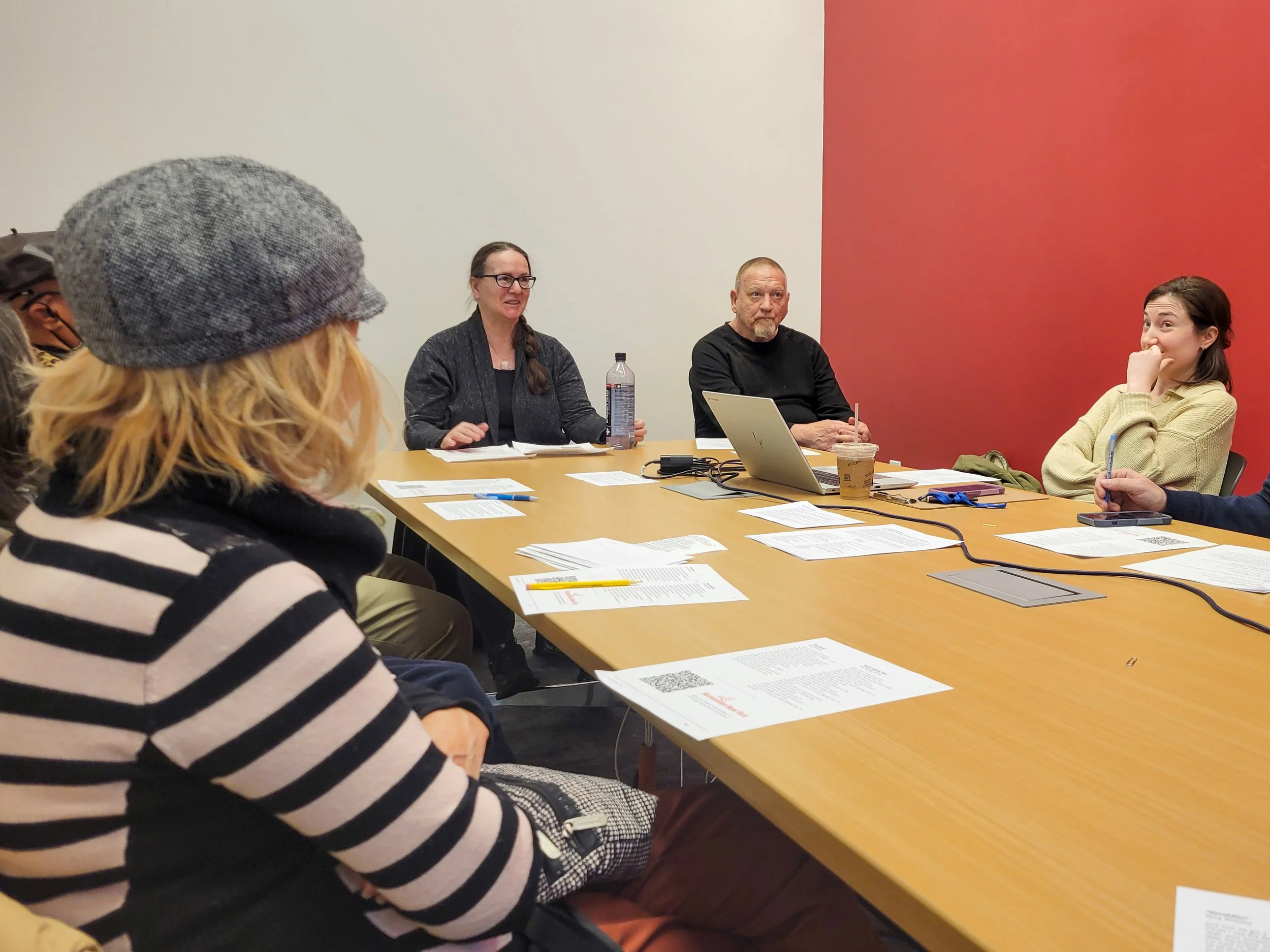
You can watch this happen in surprisingly ordinary moments. Someone pauses over a sentence and notices an ambiguity nobody else had seen. Another participant connects the discussion to a strike their grandfather joined decades earlier, or to the closure of a neighborhood church, or to the experience of watching a familiar street become economically unrecognizable within the span of a few years. Someone else draws a different parallel. The viewpoint divergence does not disappear, but the conversation continues.
No single conversation resolves political division or produces civic trust overnight. Yet something increasingly rare still takes place: people remain in conversation long enough for disagreement, recognition, and thoughtfulness to coexist.
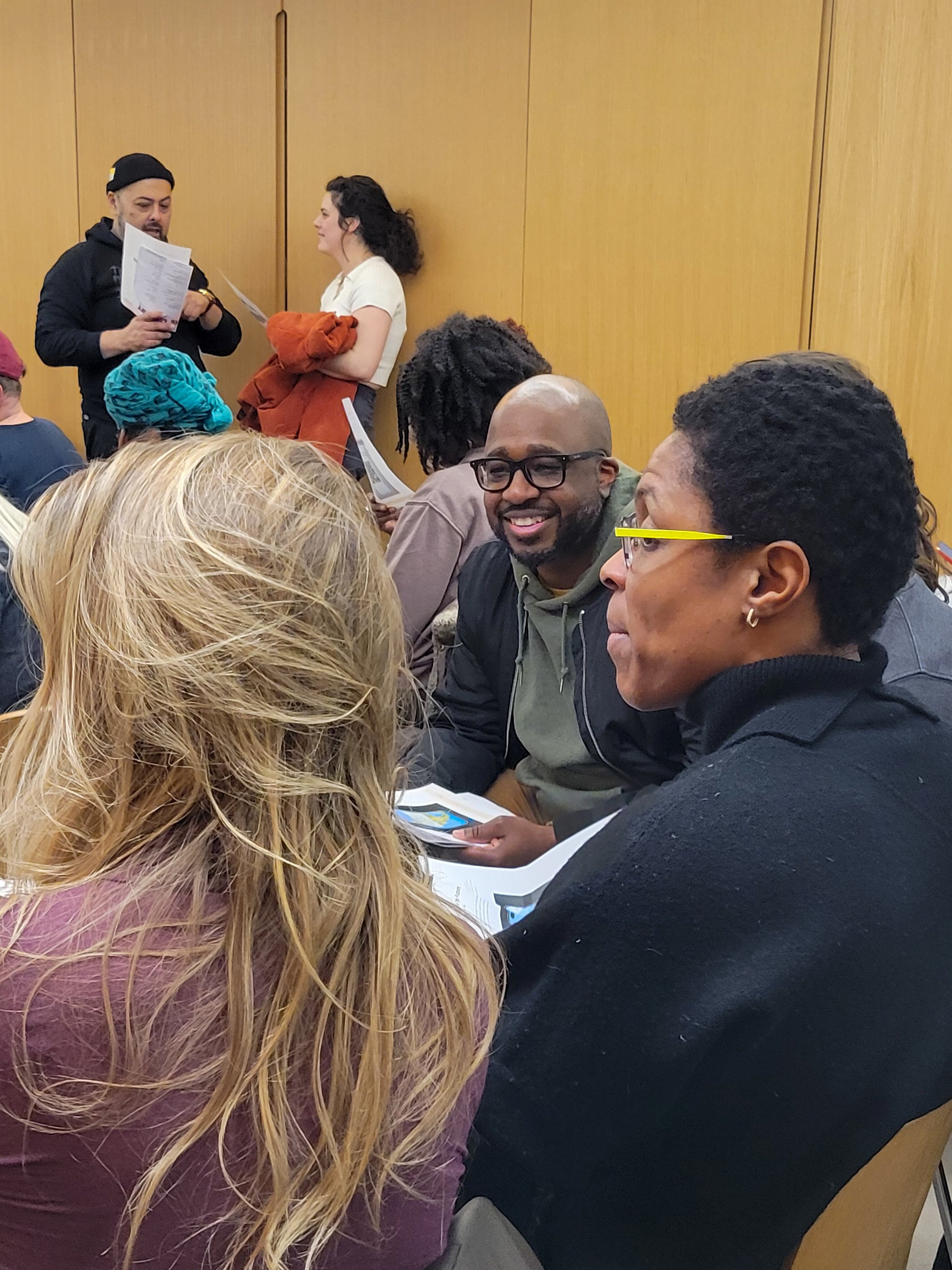
At Humanities New York, this work takes shape through a set of connected public programs and partnerships designed to support reflective conversation across New York State. Community Conversations brings small-group dialogue into libraries, museums, bookstores, and community spaces using short texts, images, or historical materials as shared points of entry. Reading & Discussion creates a slower and more sustained version of that experience through multi-session conversations centered on books and extended reading. In Common: A Humanities Forum connects this work statewide through facilitator training, shared resources, public programming, and a growing network of librarians, scholars, cultural workers, and community partners. Together, these efforts form a kind of civic infrastructure grounded not in abstraction, but in repeated public practice.
“No single conversation resolves political division or produces civic trust overnight. Yet something increasingly rare still takes place: people remain in conversation long enough for disagreement, recognition, and thoughtfulness to coexist.”
The underlying idea is simple. Democratic life depends upon spaces where people can think together seriously enough to remain connected through uncertainty and change. That rhythm can feel unfamiliar now because contemporary public culture often rewards the opposite instincts. Public discourse moves quickly and positions harden fast. Much of our political and digital culture encourages people to react before they have had time to think, interpret, or listen carefully. But human experience is rarely that clean or immediate. Most people understand their own lives through contradiction, memory, revision, and unfinished thought. The humanities make room for that reality.
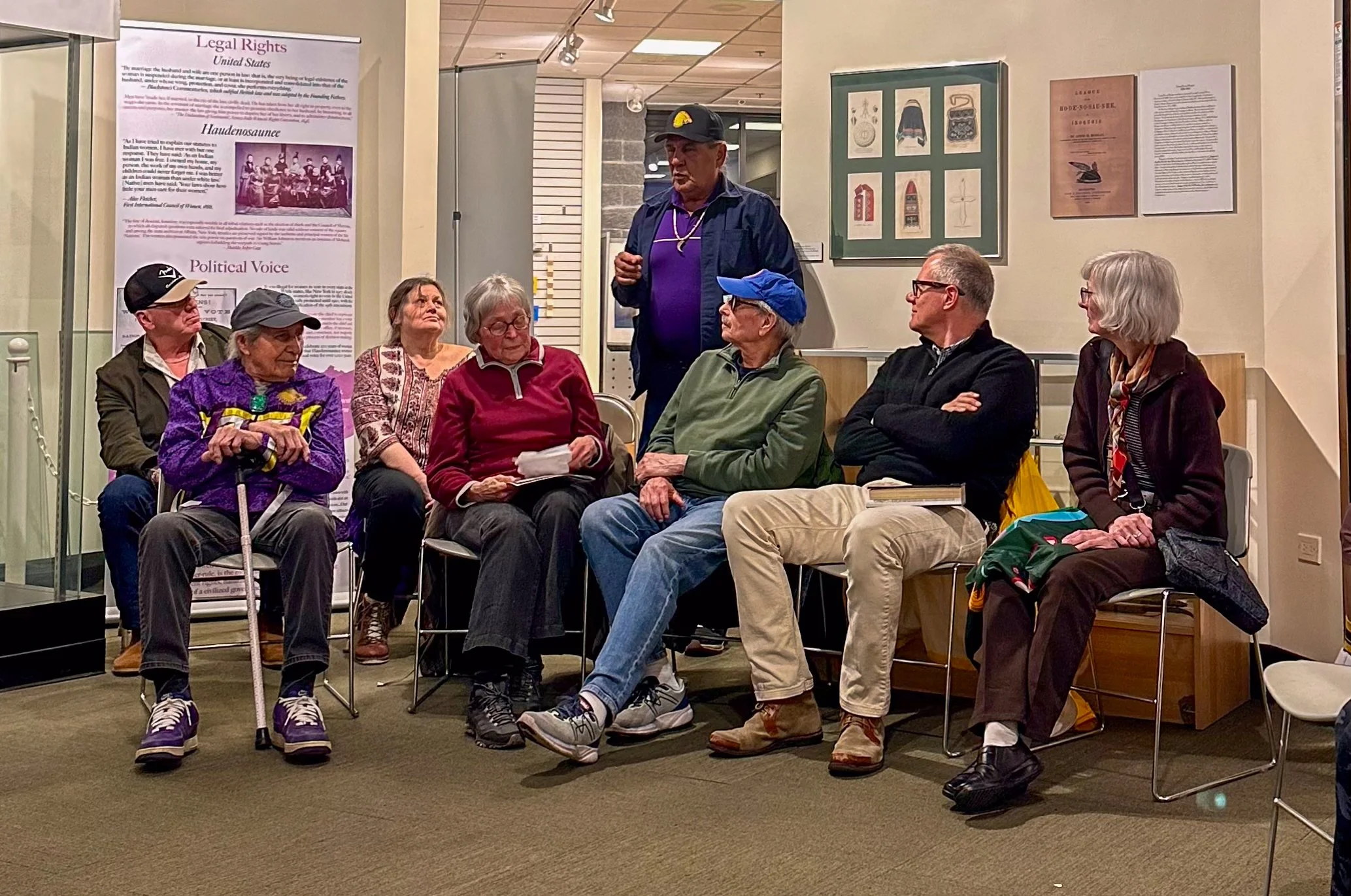
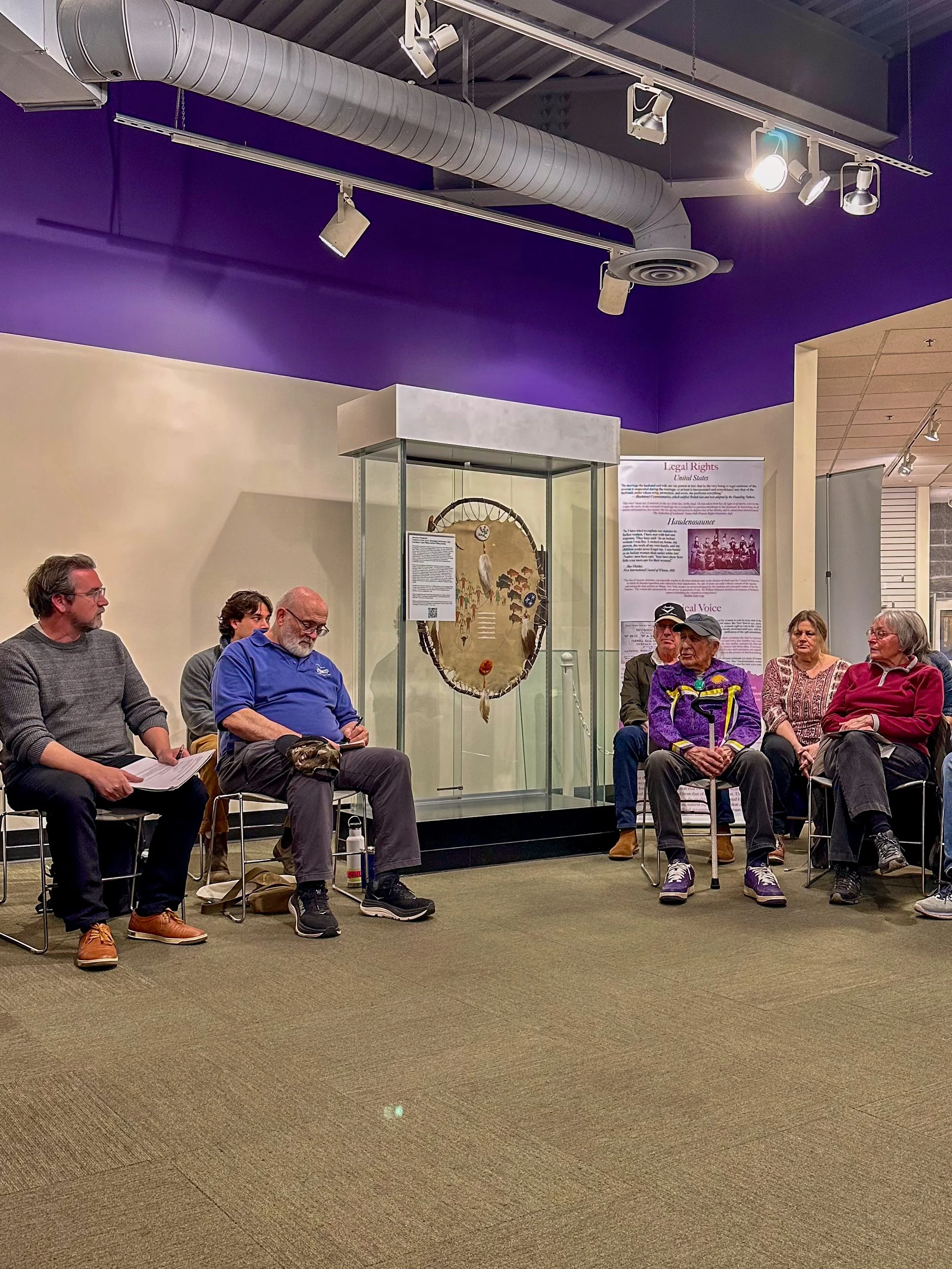
Over the last several years, Humanities New York’s partnerships with Indigenous communities and cultural leaders have also expanded and deepened our understanding of what civic life can mean. At a recent gathering at the Skä•noñh Great Law of Peace Center on Onondaga Lake, participants reflected on the Deer Hide Agreement of 1975 and the Haudenosaunee teaching that agreements must continually be “polished” through collective care if they are to endure. The phrase lingered afterward because it suggested a different understanding of public life than the one modern democracies often inherit. Civic relationships are not simply established once and secured forever through institutions alone; they require maintenance, renewal, and ongoing responsibility.
That insight also helps illuminate civic questions that conventional definitions of civics sometimes leave aside. In HNY’s partnerships with Indigenous scholars, artists, and leaders, questions of sovereignty and coexistence become visible. In humanities programs shaped by experiences of incarceration and reentry, questions of return and public belonging emerge. These are civic questions too because they concern who is recognized, who is heard, and what allows people to remain in relationship to a larger public world.
The humanities do not solve those tensions outright. They can, however, create conditions where people encounter one another with greater seriousness, historical awareness, and care.
That work feels especially important now, at a moment when many Americans experience public life less as a shared project than as a condition of exhaustion. Trust in institutions has weakened; social isolation has deepened; and even the possibility of meaningful public conversation can sometimes feel uncertain.
Yet the hunger for it persists.
People still come to these conversations after long workdays and winter commutes. They still spend evenings discussing freedom, obligation, loneliness, justice, memory, and belonging with people they may never meet again. Beneath the noise of contemporary political culture, there remains a quieter desire for orientation, recognition, and connection. Not necessarily agreement, but the sense that public life can still offer the possibility of creating meaning together.
Democratic societies require roads, bridges, transit systems, and electrical grids. But they also require places where people can gather to reflect on the kind of society they are becoming.
The humanities help set the table for those gatherings. And at this particular moment in American life, that work feels necessary.