Revolution as Return: A Conversation at Skä•noñh
by Joseph Murphy, Director of Strategic Partnerships
When people began arriving at the Skä•noñh Great Law of Peace Center on the shore of Onondaga Lake on Friday, April 10, a bald eagle circled overhead with a fish in its talons. A few of us noticed. When I mentioned it to Emerson Shenandoah, the museum’s director and Onondaga Snipe Clan Member, he nodded without much surprise. He knew that eagle, he said. There were others nearby.
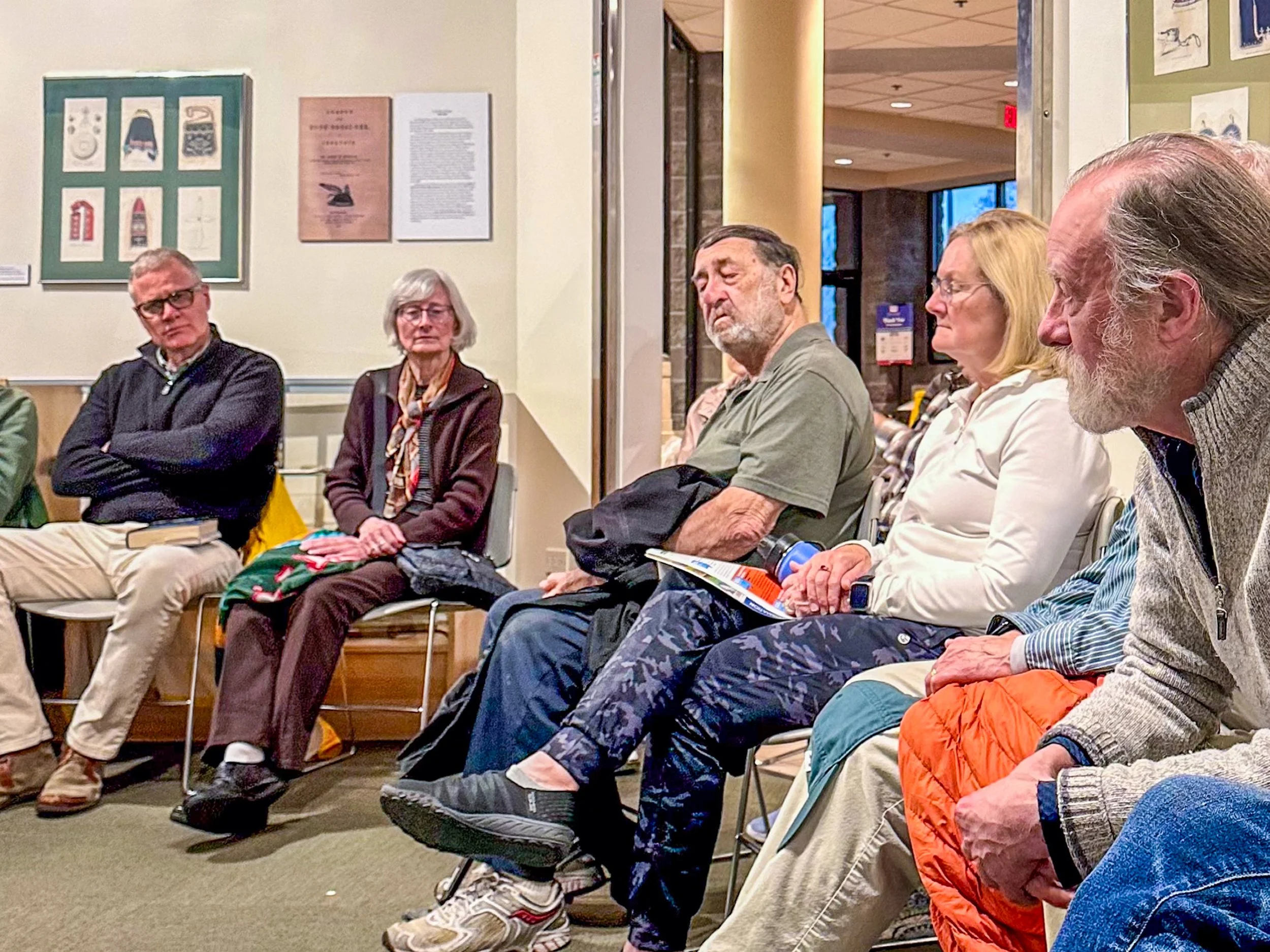
Inside, the room filled gradually. About forty people gathered, some clearly at home in the space, others there for the first time. Maps on the walls traced the reach of the Haudenosaunee Confederacy across the Northeast and into the Midwest, alongside cases holding tools, implements, and other cultural items that carried a much longer history into the room. We began with a meal: venison soup, biscuits, and other shared dishes prepared for the gathering. People sat together, introducing themselves, offering small reasons for why they had come.
The evening was part of Humanities New York’s Speaking of Revolution series, which explores change through the lenses of rupture, renewal, and return, and the tone was patient, with people there to spend time thinking.
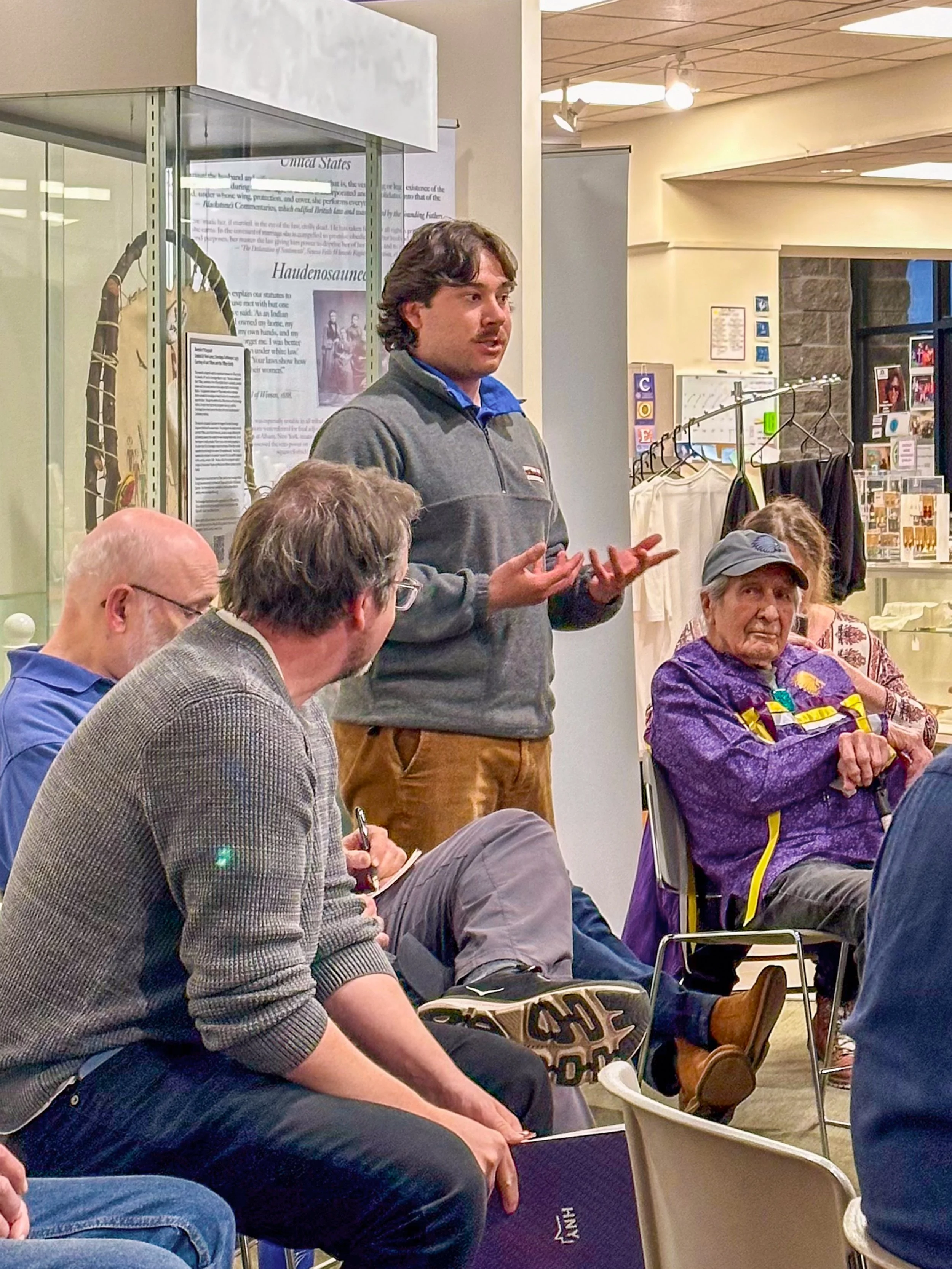
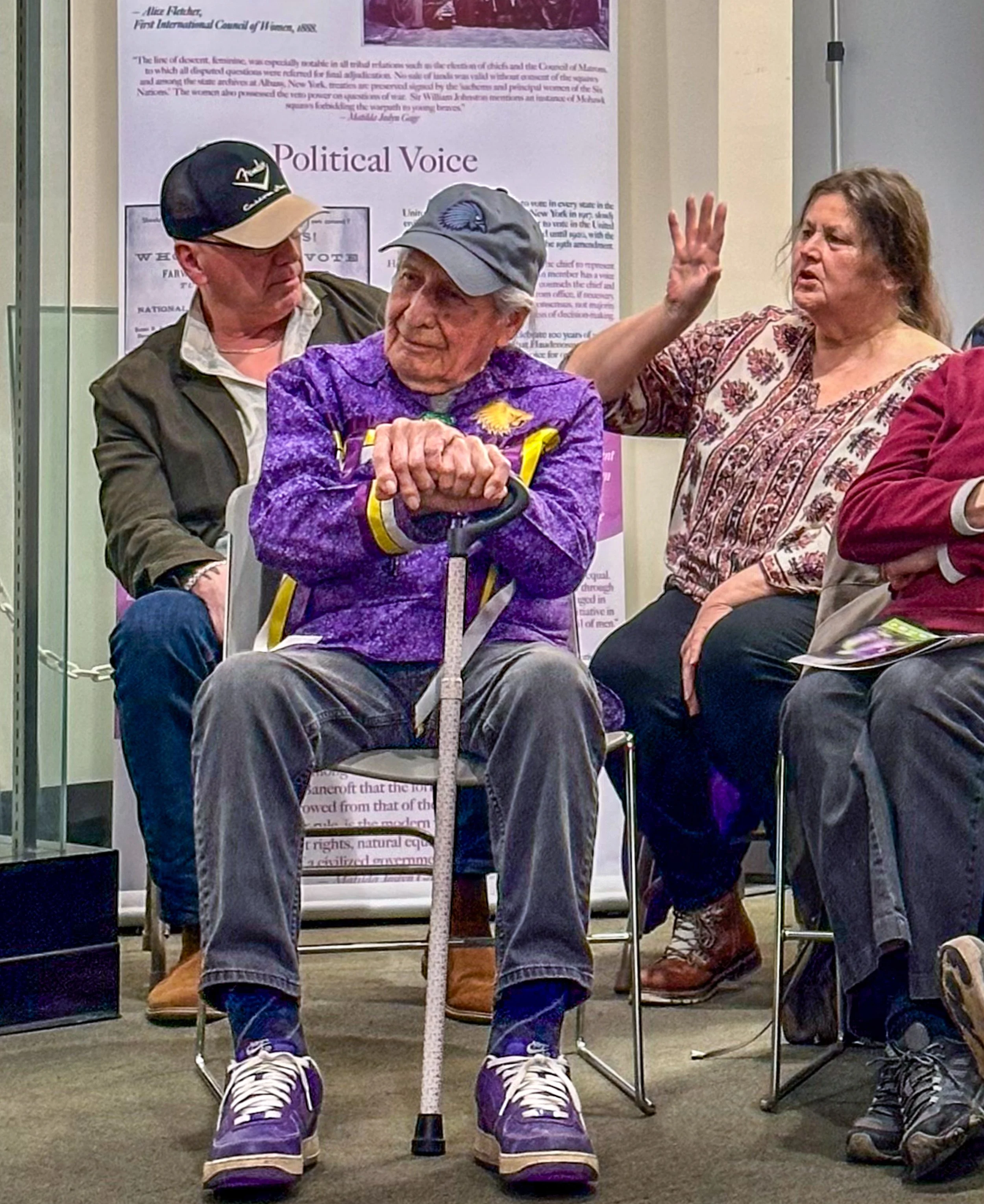
Emerson Shenandoah, Director of the Skä•noñh Great Law of Peace Center, introducing Onondaga Faithkeeper Oren Lyons.
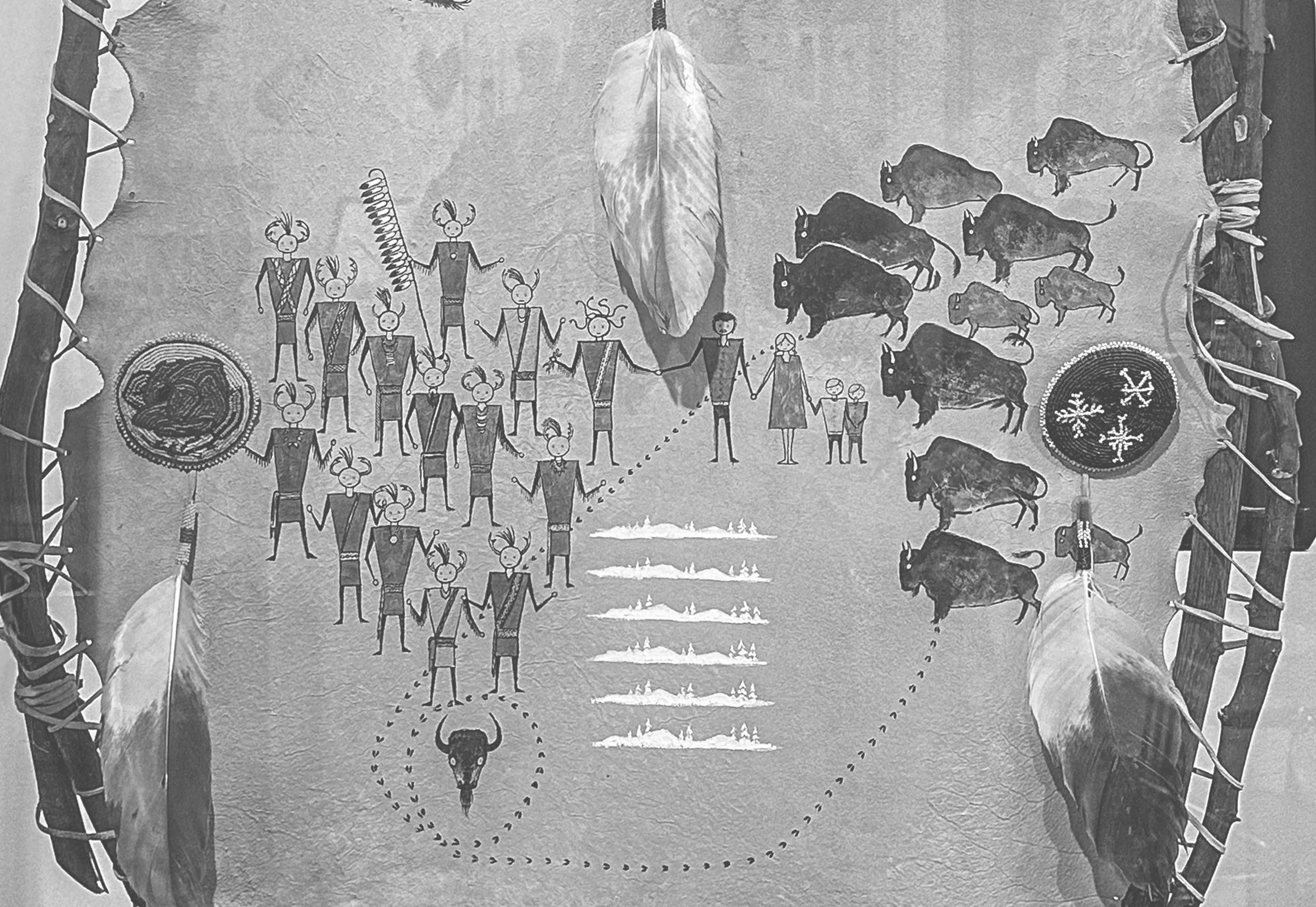
The conversation centered on the Deer Hide Agreement of 1975, an object held at Skä•noñh that is also something more than an object. It is an agreement, one that traces back to the return of buffalo to Onondaga land in the 1970s, centuries after they had been driven out of the region. Early in the evening, Onondaga Faithkeeper Oren Lyons spoke about how and why it was created, grounding the room in its history and purpose.
The story begins with the Tiffany family, a local Central New York family, who in 1973 gifted a small number of buffalo to the Onondaga Nation, helping make their return to the land possible. For the Onondaga Nation, that renewal was not simply ecological; it carried cultural and spiritual meaning, restoring a relationship that had been broken. Today, the herd has grown and is thriving on the land once again, a recovery that many in the room understood as part of a longer cycle. In response to this gift, Lyons and other Faithkeepers created the Deer Hide Agreement: not as a symbolic gesture, but as a way of giving form to the responsibilities that come with such a return. The deer hide itself bears those marks. It is something that can be seen, held, and picked back up again, an agreement meant to endure over time.
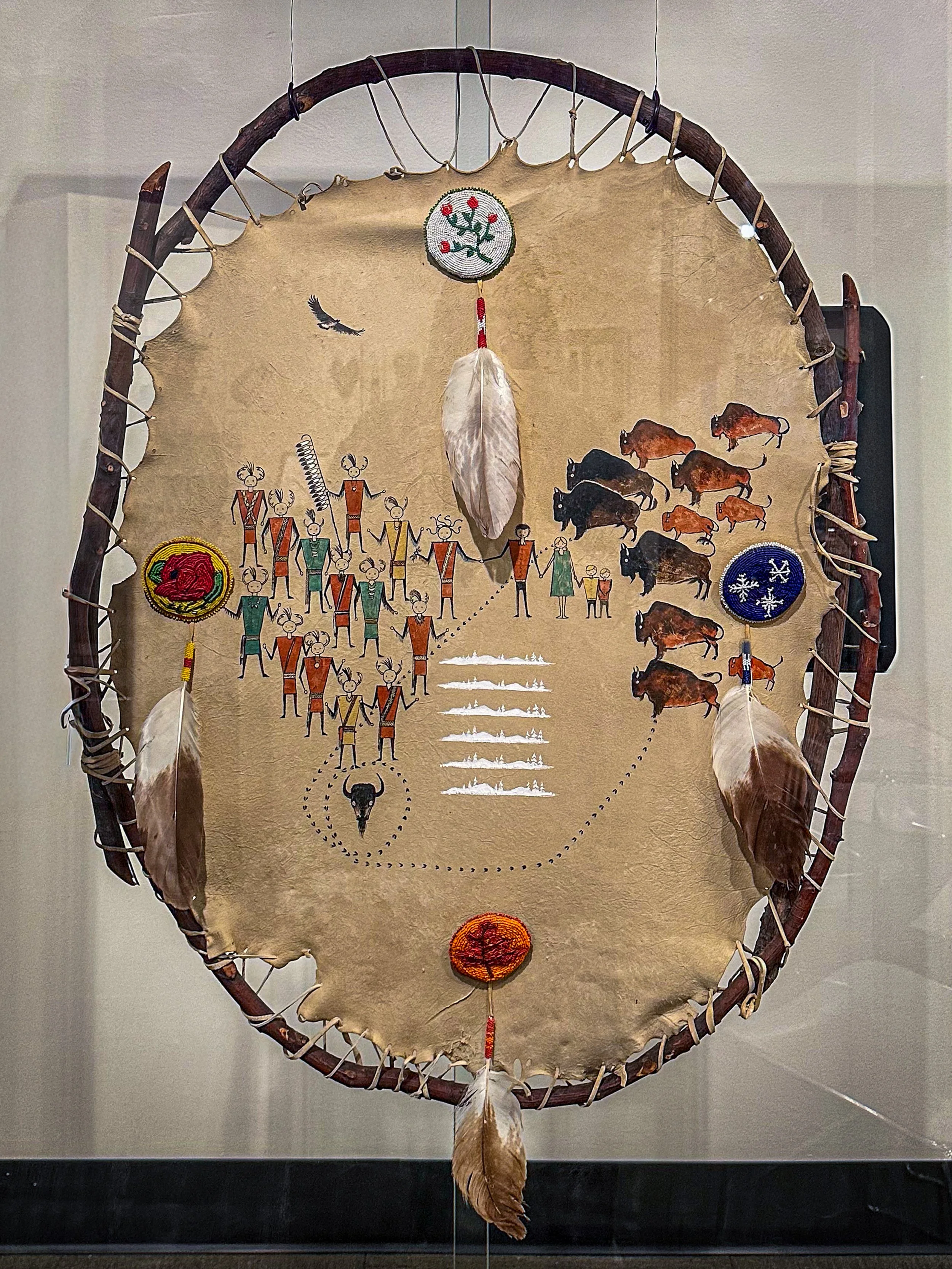
Early in the conversation, we stayed close to that idea. What does it mean to treat something like this as an agreement, rather than an artifact? What does it mean for an agreement to continue, in practice as well as principle, across time? People kept coming back to the sense that responsibility here was not abstract but carried, moving from one generation to the next, through attention and care. The material presence of the deer hide seemed to matter; it made the agreement harder to ignore, harder to reduce to a symbol, and suggested that responsibility is something lived rather than declared.
As the conversation opened, the deer hide began to travel outward into people’s own lives. One couple spoke about the way they mark Earth Day—not as a single occasion, but through ongoing work to clean and care for the land around them. Another participant described a culture in which trees are treated as the lifeblood of the community, something closer to kin than background. In the Onondaga tradition, deer themselves are understood as leaders. The language people used was careful, but the shift was clear: the agreement was no longer only something to look at; it became a way of noticing relationships that already exist.
Time came up often. People spoke about it less as a straight line and more as something that revolves—circling back, renewing, revisiting what has been inherited. One person spoke about the reappearance of the buffalo as a kind of shock, even a kind of trauma, not only in the sense of loss, but in the sense of witnessing something once thought impossible. To see, in one lifetime, the resurrection of animals that had been systematically removed from the region is to experience history differently, the attendee continued; it seemed to unsettle the idea that decline is permanent, and to open up the possibility that repair, while difficult, might not be out of reach.
That sense of return and renewal extended beyond the immediate story. The land around Onondaga Lake carries the marks of the twentieth century: industrial pollution, infrastructure that cut through neighborhoods, decisions that separated people from the environment around them. Those histories remain visible. But there were also signs of repair: the slow work of restoration, the removal of old barriers—I-81 itself coming down—and the attempt to reconnect what had been divided. It was hard not to notice the sense of different moments coexisting—what had been broken, and what might be, gradually, made otherwise.
Near the end of the conversation, we circled back to the deer hide. In Haudenosaunee tradition, agreements are not left alone once they are made. They are “polished”—revisited, clarified, made bright again over time. People came back to the phrase, as it seemed to offer a way of thinking about responsibility that is neither static nor self-sustaining: an agreement endures because people come back to it.
It is easy to think of agreements—civic, social, political—as things that either hold or fail. The conversation at Skä•noñh suggested something more demanding: agreements can fade; they can be neglected; but they can also be renewed, if people are willing to take them up again.
What that requires, and how it happens, is not settled in a single evening. But the question lingered in the room, and followed us out: if the agreements we inherit are not fixed, but living—what would it mean to return to them now, and to carry them forward with care?
Speaking of Revolution is part of By the People: Conversations Beyond 250, a national initiative to which Humanities New York contributes through its statewide Community Conversation series. By the People: Conversations Beyond 250 is a series of community-driven programs created by humanities councils in collaboration with local partners. The initiative was developed by the Federation of State Humanities Councils and the Smithsonian Center for Folklife and Cultural Heritage.