
Speaking of Revolution
Four Community Conversations explored what change can mean in the life of a community.
by Joseph Murphy, Director of Strategic Partnerships
The final conversation ended with participants weaving.
Around the table at Stitch Buffalo, a textile arts organization shaped by the creativity and labor of refugee and immigrant women, small hand looms rested before participants as they talked about family recipes, sewing, canning, and the ordinary practices that somehow survive from one generation to the next. Earlier in the evening, culture bearer Ekua Mends-Aidoo introduced Sankofa, an Ghanaian principle often described as looking back in order to move forward. As participants wove, the idea no longer felt abstract. The conversation kept returning to the same question: what is worth carrying forward?
It was a fitting conclusion to Speaking of Revolution, a series of Community Conversations presented by Humanities New York as part of By the People: Conversations Beyond 250, an initiative of the Smithsonian Center for Folklife and Cultural Heritage. Across four gatherings around New York State, participants explored a question prompted by the 250th anniversary of the Declaration of Independence: what might revolution mean in the life of a community?
The answers depended on where the conversation began.
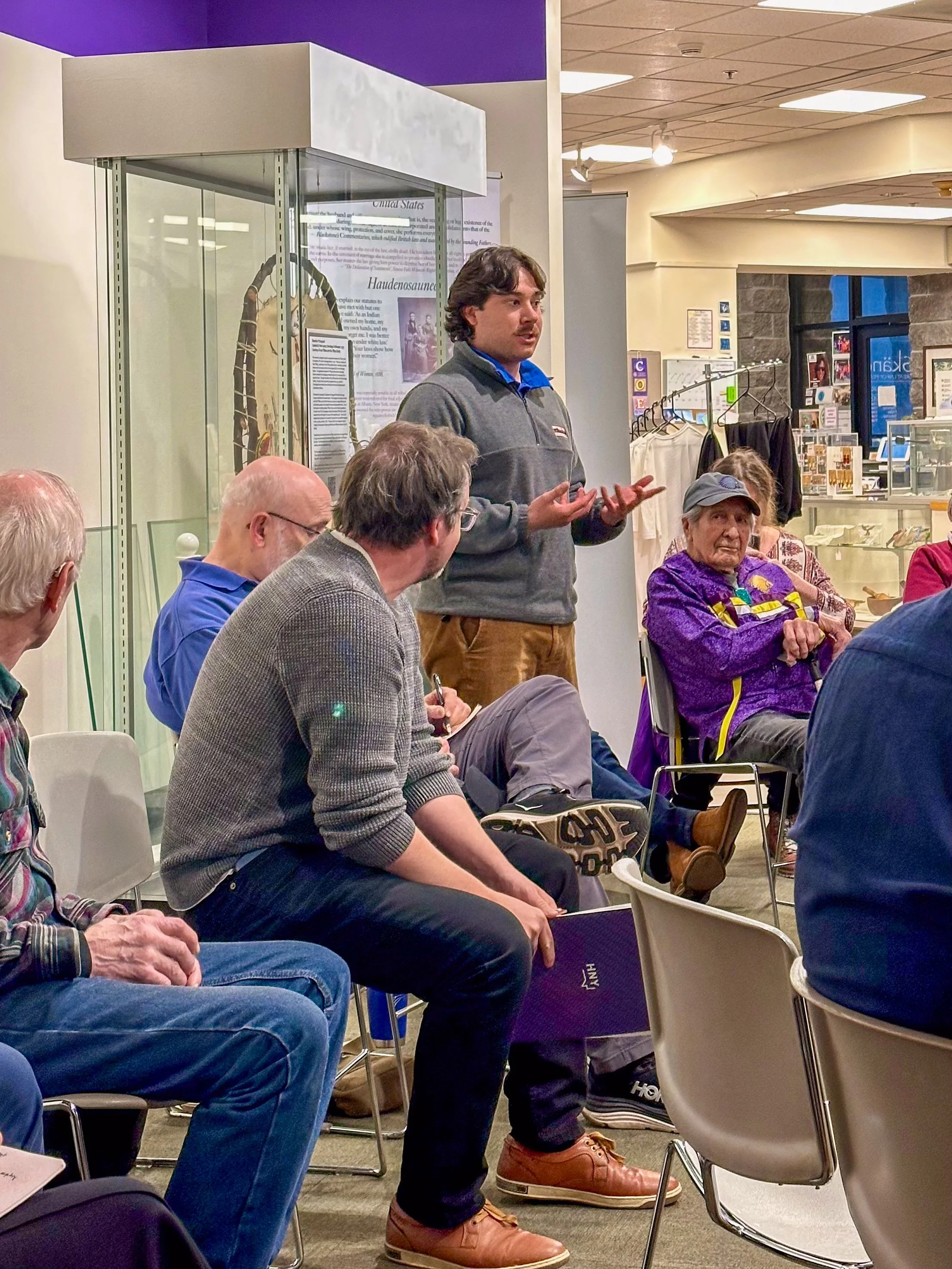
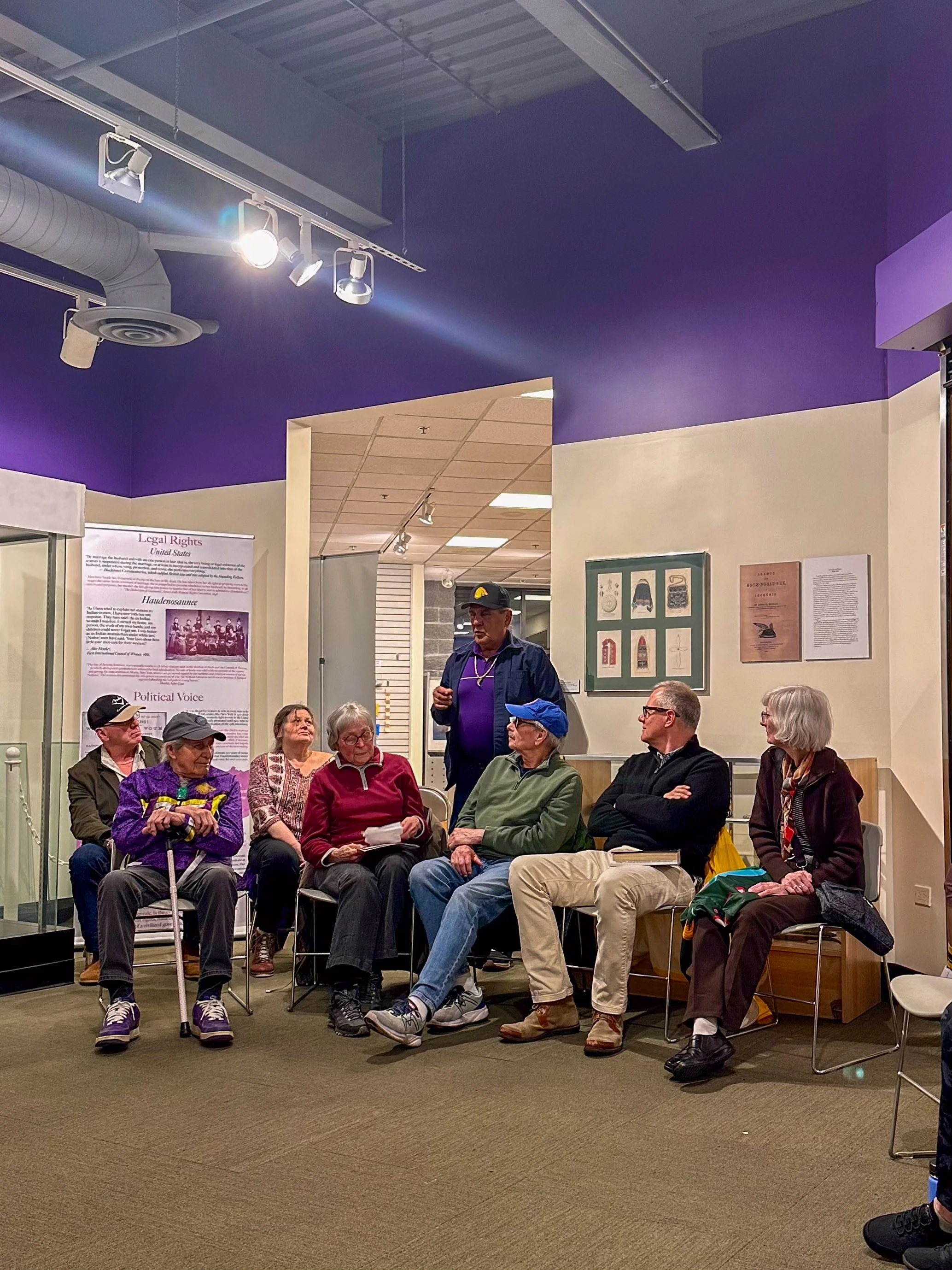
In April, participants gathered at the Skä•noñh Great Law of Peace Center in Syracuse around the Deer Hide Agreement, a symbol of renewed relationship between the Haudenosaunee and the people of New York. Haudenosaunee elder Oren Lyons reflected on diplomacy not as a historical achievement but as a responsibility renewed across generations. The conversation returned again and again to the same question: what keeps an agreement alive? Signing it is one thing. Living up to it, year after year, is another.
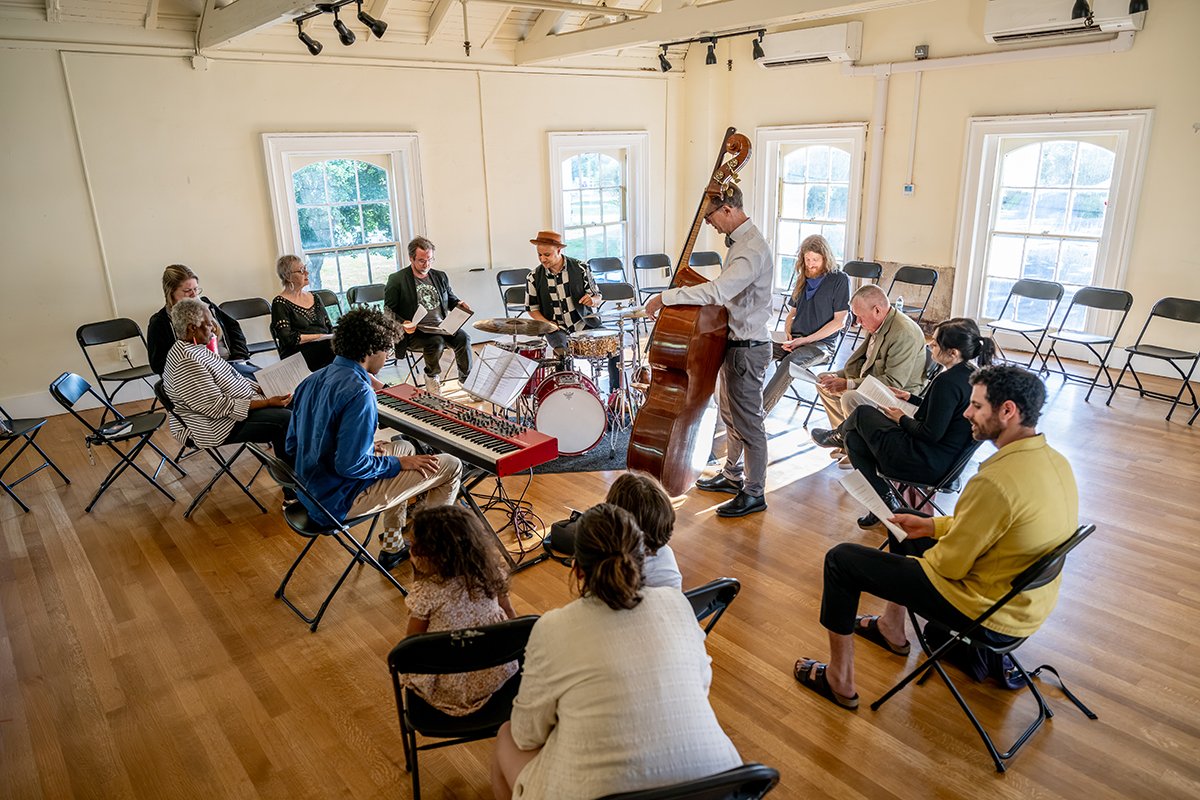
Two months later, the series resumed at Snug Harbor Cultural Center & Botanical Garden on Staten Island. Musician, educator, and cultural organizer Darrell Smith opened the evening with an original spoken-word performance accompanied by members of his band, drawing on Black musical traditions, Staten Island, and the work of memory before participants turned to Lucille Clifton's poem won't you celebrate with me. The conversation kept returning to improvisation. For the musicians in the room, it offered a language for carrying tradition into unfamiliar circumstances.
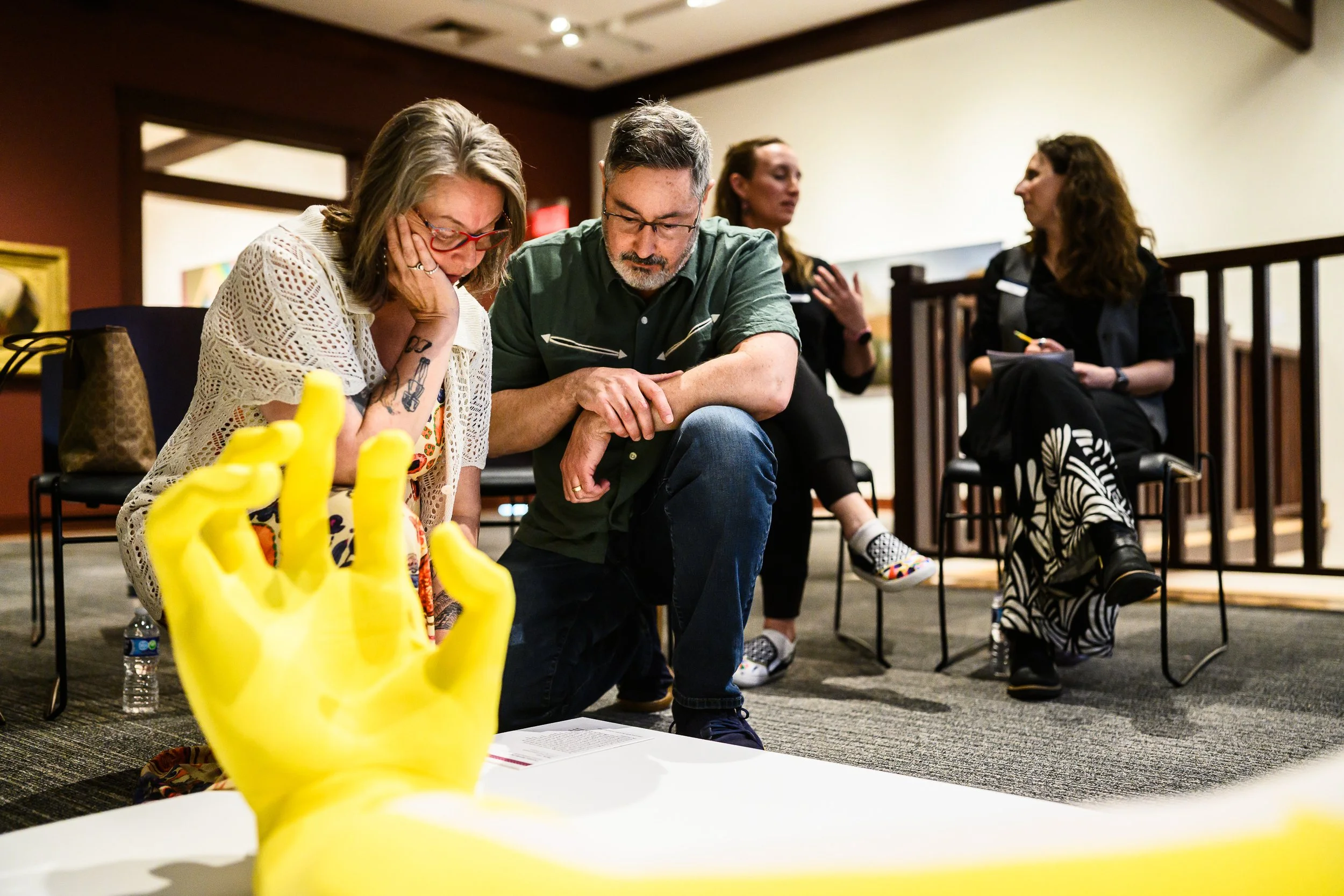
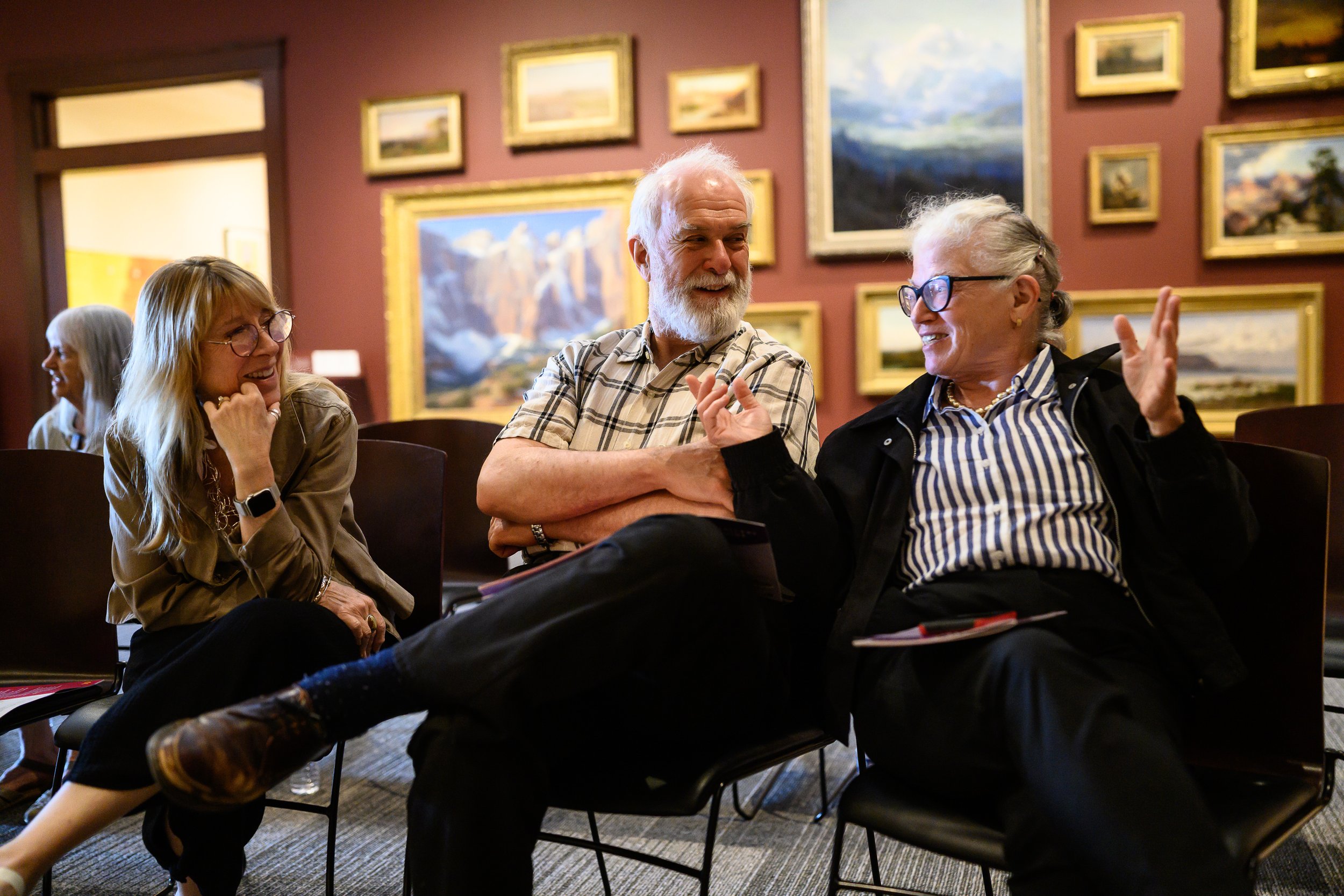
The following evening, participants gathered at The Rockwell Museum around Cannupa Hanska Luger's Harm (2021), a vividly colored sculptural forearm that reached outward into the gallery, and Albert Bierstadt’s Mount Whitney (1877), a sweeping, idealized vision of the western landscape. Seen together, the two works changed the way participants looked at each of them. One person lingered on popular conceptions of beauty. They wondered what beauty makes visible, and what it can allow us to overlook. The moment opened questions about Indigenous presence, historical memory, and the stories landscapes carry. No one hurried toward an answer.
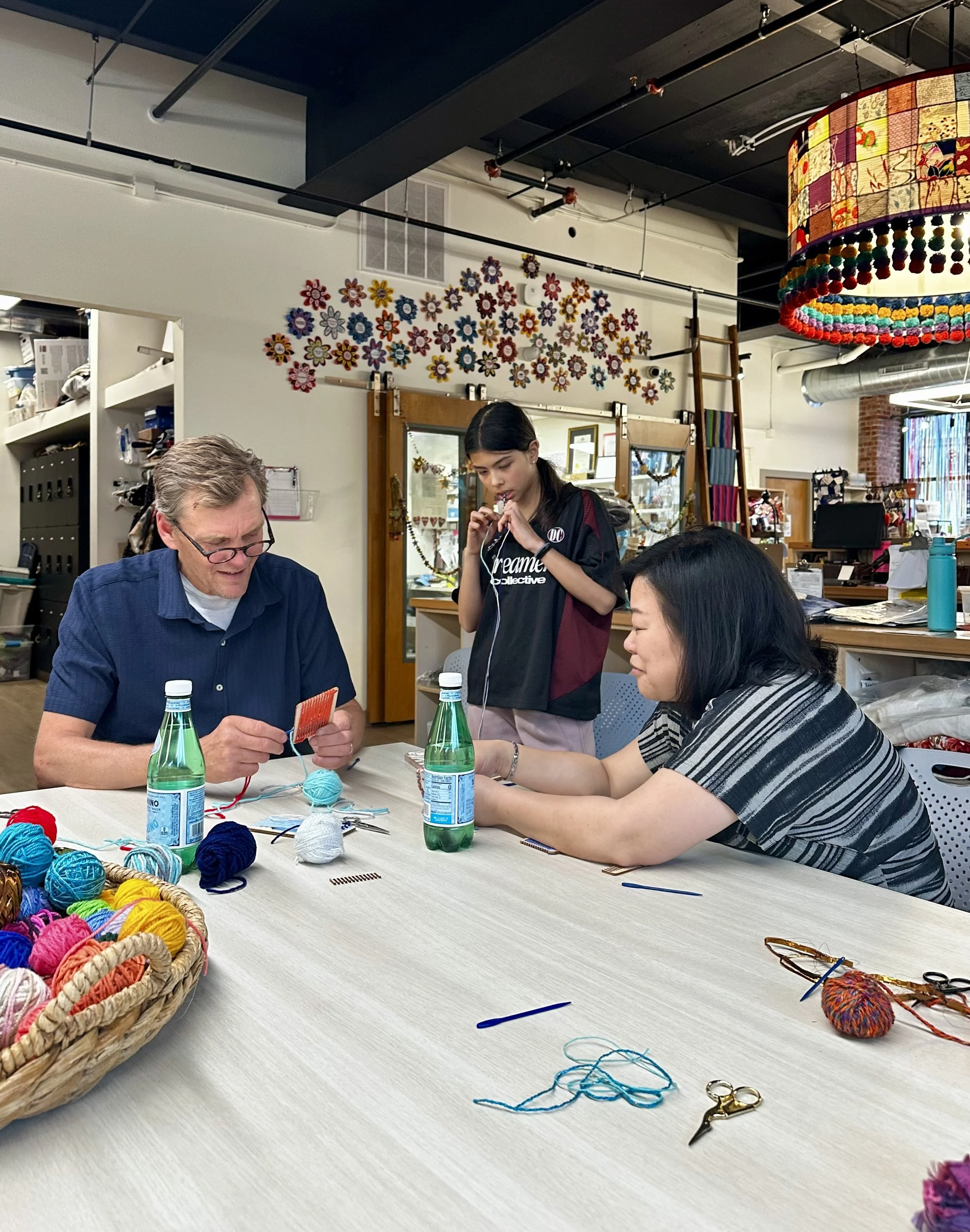
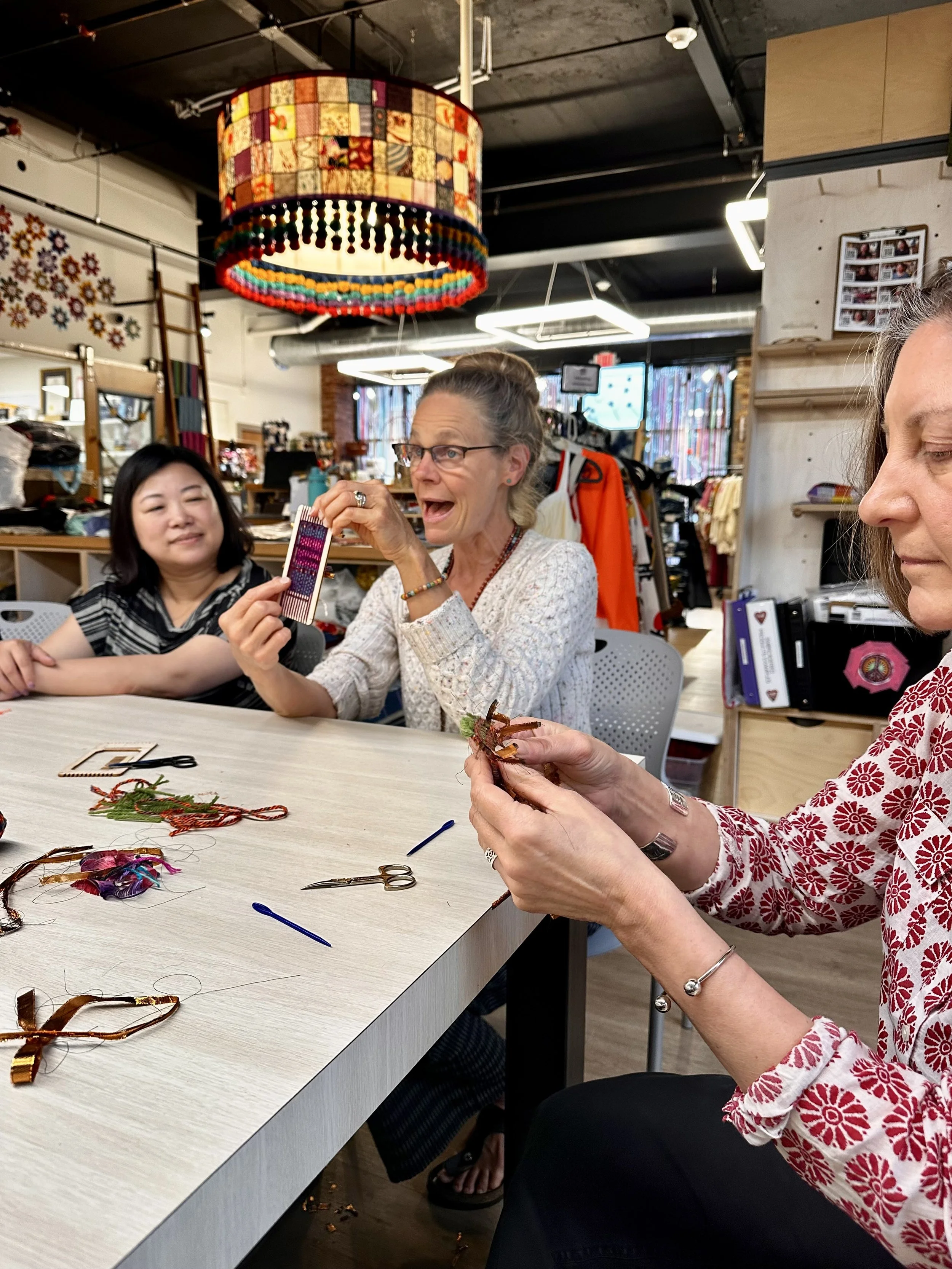
By the time the series reached Buffalo, the conversation had taken on a more reflective rhythm. As participants wove, they shared family histories and spoke about the traditions they still practice in their daily lives. They also expressed gratitude for the chance to gather and reflect together. The handwork gave the conversation a steadier pace and allowed people to remain with those stories as they unfolded.
Revolution took a different shape in every conversation. At Skä•noñh, participants returned to an agreement. On Staten Island, they returned to a poem. In Corning, they looked again at familiar works of art. In Buffalo, they returned to a loom.
Across four very different gatherings, no single definition of revolution prevailed. They pointed instead toward a shared practice: communities making themselves, one conversation at a time.